
Environment and Climate Change Canada Lab Facilities
Multi-hazard analytics for mission-critical facilities, as dashboards and workflow-ready datasets.
Mission-critical facilities | Multi-hazard analytics | Portfolio-to-asset drill down | Workflow-ready outputs | ASTM E3429 compliant
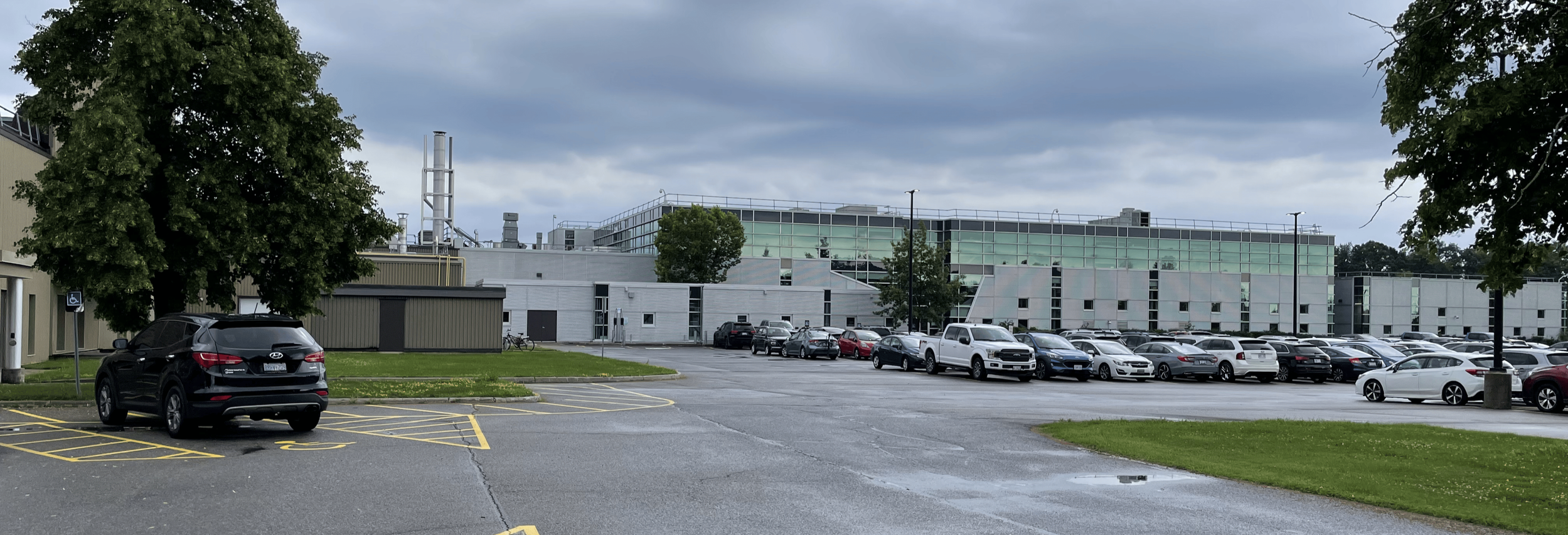
Representative ECCC critical facility
What we delivered
Kinetica Risk delivered:
Three facility-level portfolio dashboards with linked drill-down to asset-level views
Twenty-eight asset dashboards to support more detailed review of asset-specific risk and mitigation opportunities
Integration-ready datasets formatted to ECCC’s requested structure for downstream use in existing business tools
Asset categorization aligned with the asset management data already used in ECCC’s planning workflows
Risk breakdowns, mitigation options, and cost-benefit outputs structured to inform maintenance, capital and resilience review
Traceable deliverables aligned with ASTM E3429-24, incuding provenance files.
The Challenge
The selected facilities represented diverse hazard environments, building conditions, and operational contexts. For ECCC, the challenge was not only understanding physical risk, but doing so in a way that could support continuity of essential functions and fit within existing asset-management processes such as building condition assessments, annual maintenance budgeting, and capital planning.
Kinetica Risk supported Environment and Climate Change Canada’s (ECCC) real property and facility management team with multi-hazard analytics for three regionally important facilities selected for their mission criticality and diverse hazard exposure. The work was designed to translate facility- and asset-level risk into structured outputs that could support routine planning, budgeting, and resilience decisions rather than sit apart as a one-time study.
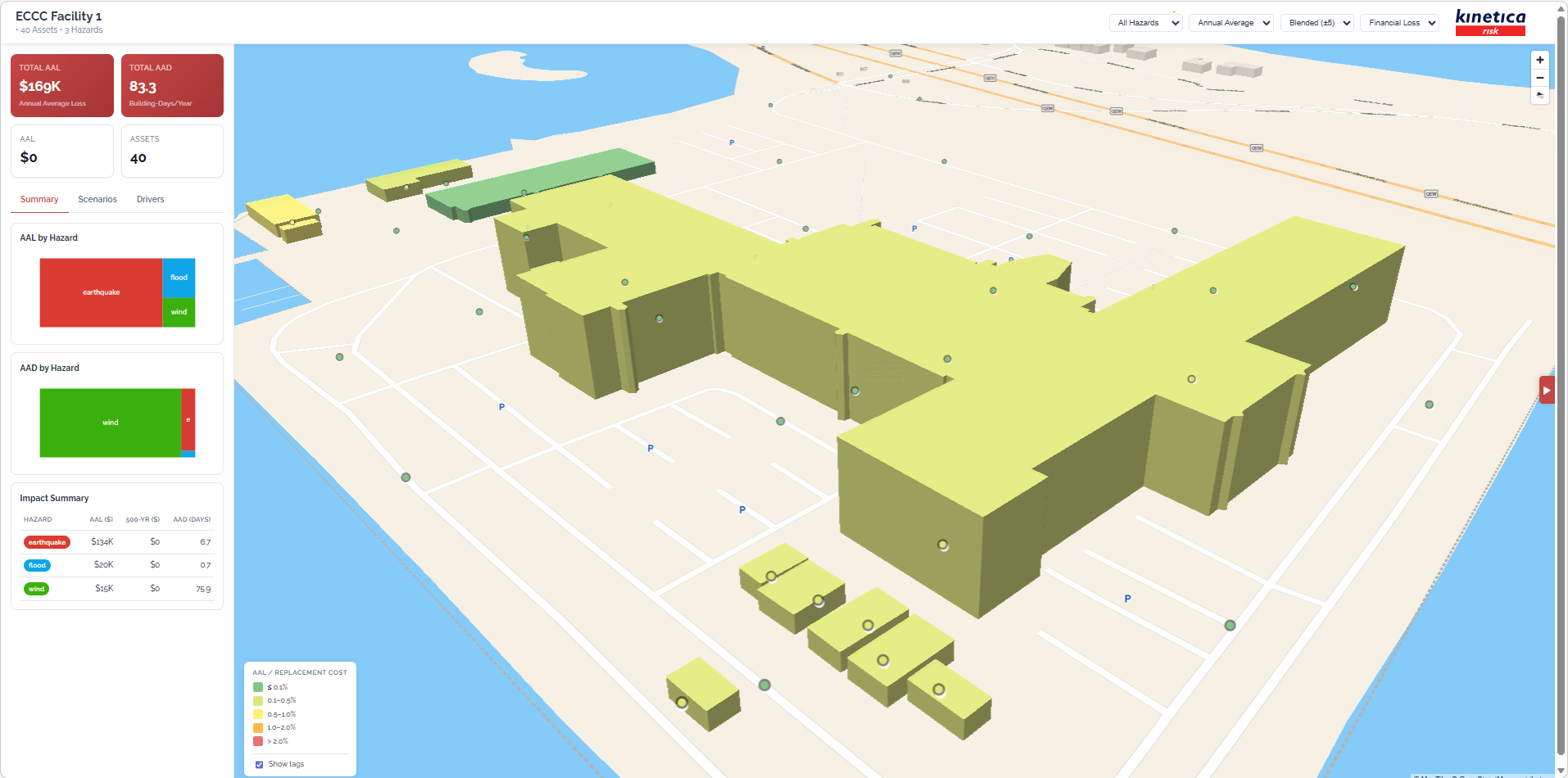
Portfolio interactive dashboard - summary view
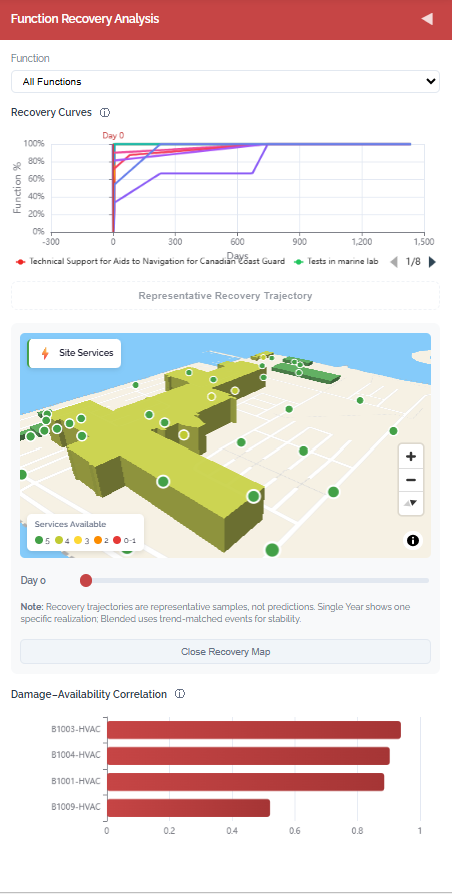
Function recovery panel
Decision value
The result was a self-consistent set of risk insights across hazards, delivered in a form aligned with data pipeline and taxonomy used by the client. Rather than producing a standalone report with limited afterlife, the project translated hazard risk into digestible, traceable planning inputs compliant with ASTM E3429 that could inform maintenance decisions, capital investment discussions, and resilience planning for critical functions. This also helped reduce the risk of knowledge loss as internal roles and leadership change over time, because the risk outputs can be reused rather than one-off interpretation.
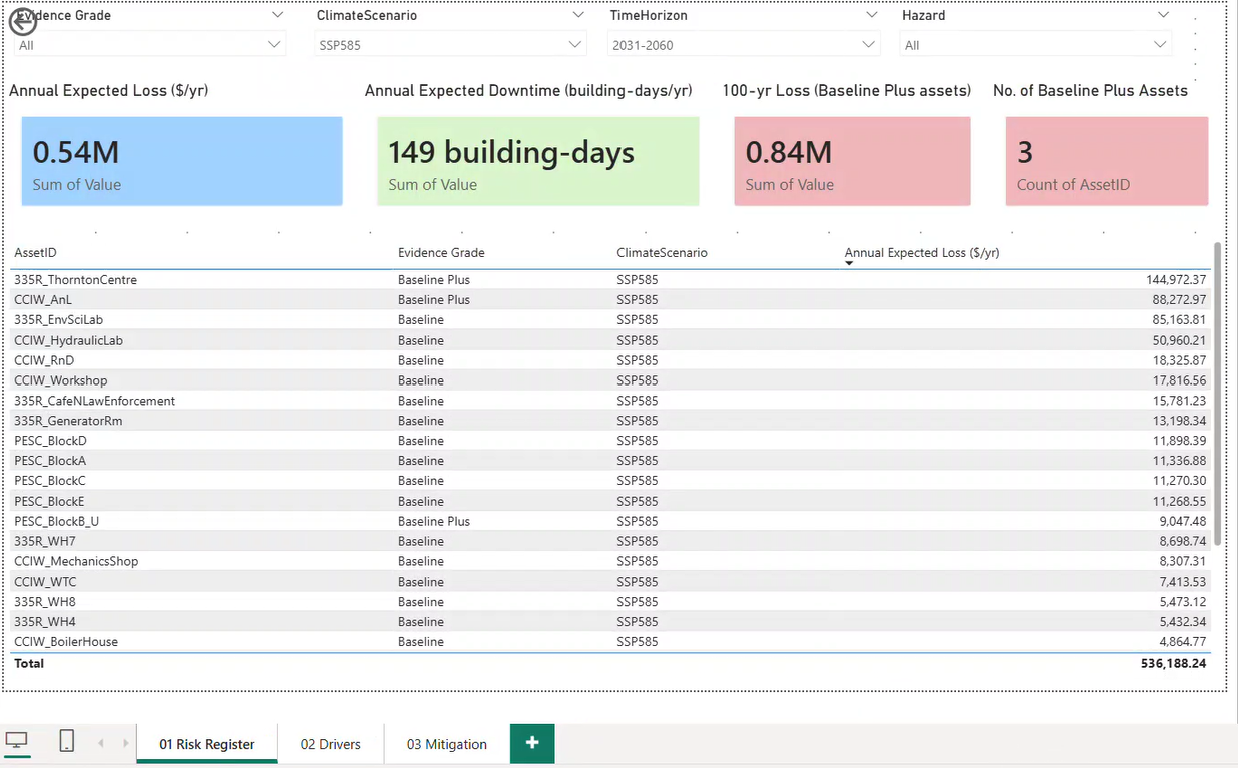
PowerBI ingested asset risk register
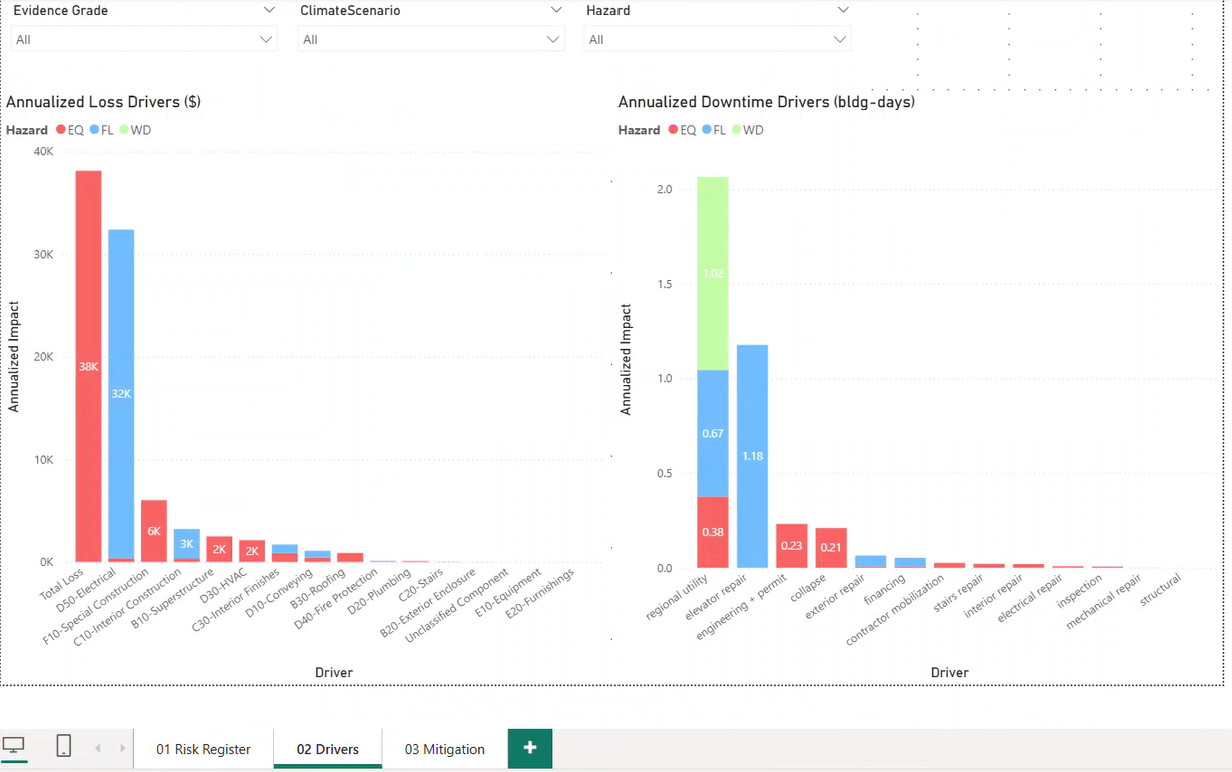
PowerBI ingested risk driver by asset
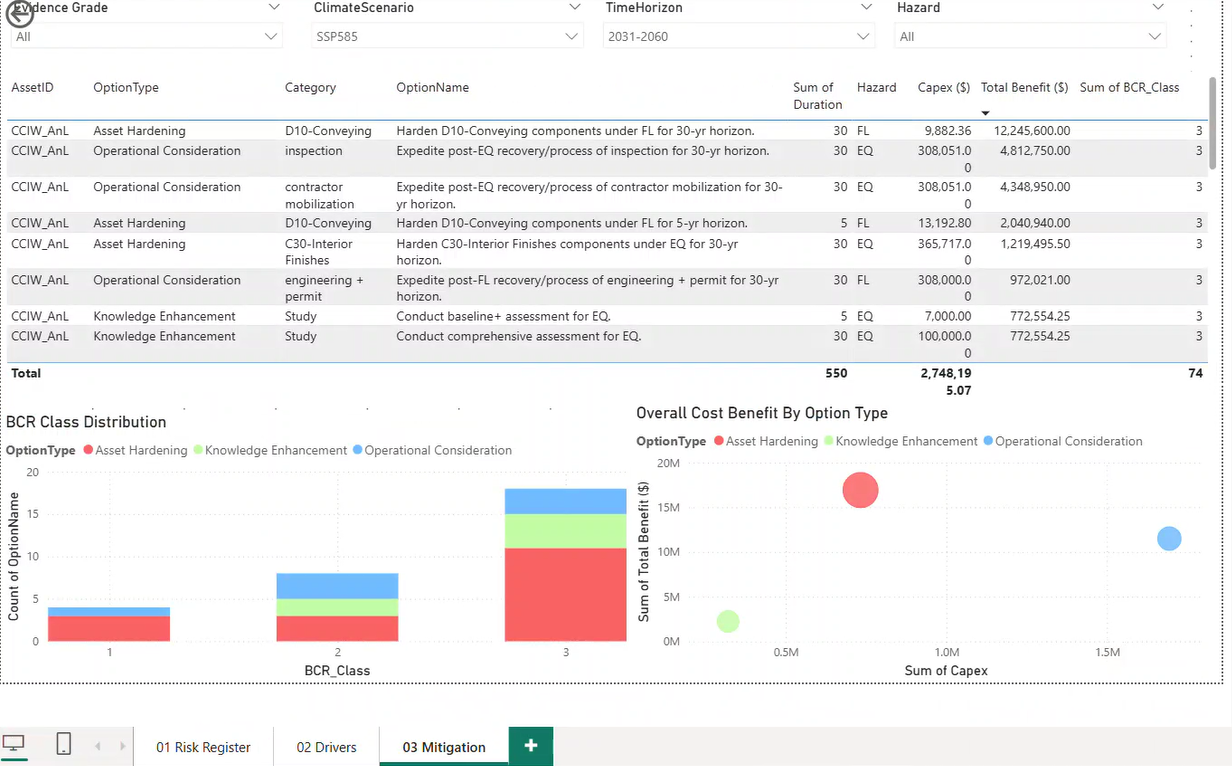
PowerBI ingested mitigation option cost-benefit summary
The level of analytical detail was matched to existing building condition information, helping ensure that the work could be adopted without forcing a new planning logic on the client.